 Anxiety Remedy
Eye & Vision · Supplement Review
Visiflora Reviews: 21 Ingredients, 7 Doses Shown
 60-Day Money-Back Guarantee
Verdict: AREDS2 science, doses you can't check The strongest evidence here is AREDS2 itself: the National Eye Institute trial showed a high-dose antioxidant and zinc formula slowed progression of macular degeneration in high-risk people, and that lutein and zeaxanthin could replace beta-carotene — which AREDS2 removed because it raised lung cancer risk in smokers. Visiflora still contains beta-carotene, packs 21 named ingredients into one capsule, and discloses only seven doses — the vitamin and mineral base. Fourteen share a 351 mg blend, so the doses can't match the studies. And the count itself doesn't add up: seven disclosed plus fourteen in the blend makes twenty-one, not the twenty-two the brand markets. Buy it for the ingredient list, not for the 22-ingredient count.
Get Today's Price on the Official Site →Prices checked November 2026 · 60-day guarantee stated; official site only.
Does Visiflora work? What the evidence says
Start with the trial, because it's the best evidence on this page — and it isn't about this product. The ingredients have research behind them. The product itself doesn't. And the doses are the problem: most of them are hidden, and the ones that are hidden can't be checked.
The strongest ingredient evidence is AREDS2 itself. The National Eye Institute's AREDS trial (2001) showed a high-dose antioxidant and zinc formula slowed progression of age-related macular degeneration in people at high risk (AREDS Research Group, 2001, PMID 11594942), and the AREDS2 trial (2013) showed lutein and zeaxanthin could replace beta-carotene in the formula — a change made specifically because beta-carotene raised lung cancer risk in smokers (Chew et al., 2013, PMID 23644932). That second point matters here, because Visiflora still contains beta-carotene as its vitamin A source — the ingredient AREDS2 deliberately removed.
But here's the gap. AREDS2 tested six ingredients at full doses across two capsules a day, in people with intermediate or advanced macular degeneration. Visiflora packs 21 named ingredients into one capsule, hides 14 doses, and is sold to the general public for screen fatigue and night vision — a different population, a different dose, and no trial of its own. Saffron and bilberry have small positive trials for eye health, but those trials used doses this blend can't contain. The gut-eye story has one small 2024 trial behind the concept and no trial behind this product.
So here's the honest version: a capsule with the right headline ingredients at doses you mostly can't verify, sold on a gut story the bottle doesn't support. "22-in-1 gut-eye formula" is not a fair description — the count itself doesn't add up.
The quick take
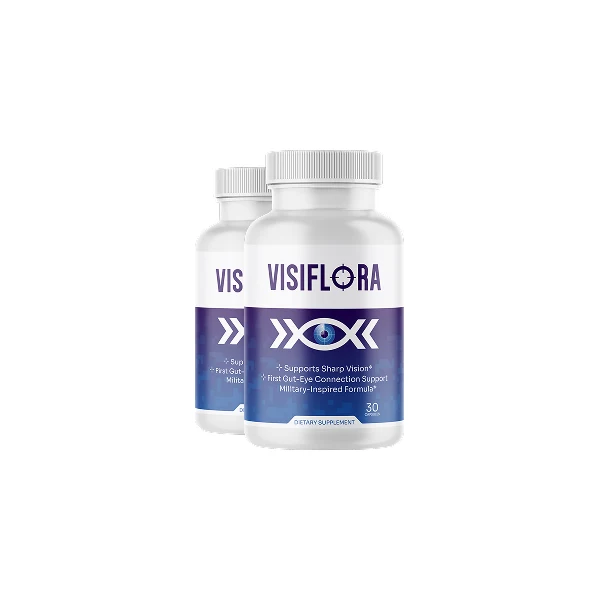
- What it is: a once-daily vegetarian-friendly eye capsule sold on a 'gut-eye' story — that gut barrier health influences what reaches your retina. Thirty capsules a bottle, one month per bottle.
- What it costs: $79 a bottle on the smallest pack — two bottles for $158. $177 for three ($59 a bottle). $294 for six ($49 a bottle), free US shipping on the bigger packs. $99 is the struck-through list price, and some mirrors list a $69 single bottle.
- The label: 21 named ingredients in total, including the full AREDS2 core plus astaxanthin, bilberry, saffron, taurine and ginkgo. Seven amounts are disclosed — the vitamin and mineral base — and 14 ingredients share a 351 mg proprietary blend. The brand markets it as '22-in-1', but I can only count 21 named ingredients.
- The guarantee: 60 days, money back, return the bottles. A standard window for this category, and shorter than the 365-day guarantees some formulas carry.
- My take: the headline ingredients are the right ones, and the AREDS2 core is the only eye formula with a landmark trial behind it. But 21 named ingredients can't all sit at researched doses in a single capsule, and the gut-eye story has no probiotics in the bottle to back it up.
My rating is
Best for: anyone who wants a broad eye formula built on the AREDS2 core, and who is happy to pay for convenience rather than verified doses.
What is Visiflora?
Forget the gut story for a second and look at what's actually in the capsule. Visiflora is a once-daily vision capsule built on an unusual premise: that gut barrier health influences what reaches your retina. Behind the story is a label the brand calls 22-in-1 that includes every component of the AREDS2 formula — lutein, zeaxanthin, vitamin C, vitamin E, zinc and copper — plus astaxanthin, bilberry and saffron, three of the better-evidenced eye nutrients outside AREDS2. One capsule a day, 30 capsules a bottle, so one bottle is a 30-day supply. It's vegetarian-friendly, non-GMO and stimulant-free, and it's sold only through the official website.
The formula is broader than the story suggests. Strip the gut-eye narrative and you find the six-component AREDS2 core — the only eye supplement formulation with a landmark National Eye Institute trial behind it — plus a supporting cast of antioxidants and botanicals: taurine, ginkgo, alpha-lipoic acid, grape seed extract, rutin, quercetin and a vitamin and mineral base. That's a genuinely good ingredient list on paper. The open question is whether 21 named ingredients fit into one capsule at doses that matter, and the label's answer is: mostly, you can't tell.
What makes Visiflora worth reviewing properly is that it sits right on the line between a serious formula and a marketing exercise. The AREDS2 core is real science. The 22-in-1 count is a selling point that works against the formula, because a single capsule can only hold so much. You can see all our Eye & Vision reviews if you want to compare it with the other vision formulas on this site.
The gut-eye story, checked
This is the story you're paying $158 to believe, so it's worth pulling apart before you spend it. The sales page sells a "gut-eye axis": the idea that gut barrier health influences inflammation that eventually affects the eye, and that fixing the gut helps the retina. There is real research on the gut-retina axis — a 2024 randomised trial in Nutrients looked at micronutrient supplementation and the gut-retina axis in patients with macular change — but the evidence is early, small, and a long way from a proven product claim.
The honest problem with the story is the bottle itself. A gut-eye formula that contains no probiotics and no prebiotic fibre is selling a gut story with eye ingredients. The formula's gut-barrier group — grape seed extract, rutin, quercetin — are antioxidants, not gut flora support. They're good ingredients for blood vessels, but they don't do what the story says they do. That's marketing dressed as mechanism, and it's worth naming plainly.
None of that makes the eye ingredients bad. Lutein and zeaxanthin concentrate in the macula, the part of the retina responsible for sharp central vision, and they're the two nutrients with the best evidence in eye health. The gut-eye story is the wrapping; the AREDS2 core is the product. Judge the wrapping separately from what's inside.
What's inside: the ingredients
Twenty-one named ingredients, and only seven amounts disclosed — that's the whole story of this label in one line. Here's the honest table:
| Ingredient | Amount per Capsule | What It Does |
|---|---|---|
| Vitamin A (as beta-carotene) | 450 mcg RAE | Vision and eye surface health — see the smoker warning below |
| Vitamin C | 90 mg | Antioxidant; part of the AREDS2 core |
| Vitamin E | 15 mg | Antioxidant; part of the AREDS2 core |
| Zinc | 11 mg | Macular health; part of the AREDS2 core — one of seven disclosed doses |
| Selenium | 20 mcg | Antioxidant mineral |
| Copper | 0.9 mg | Balances zinc; part of the AREDS2 core |
| Chromium | 15 mcg | Trace mineral, blood sugar support |
| Proprietary blend (14 ingredients) | 351 mg total | Lutein, zeaxanthin, astaxanthin, lycopene, bilberry, saffron, taurine, ginkgo, eyebright, grape seed, coleus forskohlii, alpha-lipoic acid, rutin, quercetin — no individual amounts |
Two honest notes. First, the disclosed nutrients are the right ones — but the zinc at 11 mg is the standard daily amount, not the AREDS2 dose: AREDS2 used 25 mg of zinc a day. Eleven milligrams is a normal daily intake, not the trial dose, so don't read the AREDS2 name as a dose match. Second, the 351 mg blend is the problem: fourteen ingredients share 351 mg, so the average is about 25 mg each. AREDS2 used 10 mg of lutein and 2 mg of zeaxanthin a day, which would fit — but saffron studies used 20 mg a day, bilberry studies used far more, and ginkgo studies used 120 to 240 mg a day. Fourteen ingredients can't all sit at researched doses inside 351 mg. The AREDS2 formula manages six ingredients across two capsules; Visiflora tries 21 named ingredients in one. And one more count check: seven disclosed plus fourteen in the blend makes twenty-one named ingredients. The brand calls it '22-in-1', but I couldn't find a 22nd named ingredient on the label — so the count itself is a claim, not a fact.
And the disclosed doses are a small slice of the capsule by weight, too. Vitamin C 90 mg, vitamin E 15 mg, zinc 11 mg and copper 0.9 mg, plus the trace amounts of vitamin A, selenium and chromium, add up to roughly 117 mg — about a quarter of the capsule's ~468 mg of actives. The other three-quarters sit in the 351 mg blend with no individual amounts at all.
How to take it
Easy routine, and the meal part actually matters here. One capsule a day, with a meal — that's the whole routine. A bottle holds 30 capsules, so one bottle covers exactly a month. The page doesn't specify a time of day, so take it when you'll remember it, ideally with food, since lutein and zeaxanthin are fat-soluble and absorb better with a meal that contains some fat.
They're swallowed capsules, so there's no taste issue to speak of. The formula is vegetarian-friendly and stimulant-free, so there's no jitter and nothing habit-forming. If you're the kind of person who judges a supplement by feeling it work, this one will disappoint you on day one — eye nutrients work over months, not hours, and the page is honest about that part at least.
What to know before you buy
Five things on the sales page made me pause. Check them before you order:
- Beta-carotene is in the formula. AREDS2 removed beta-carotene specifically because it raised lung cancer risk in smokers. Visiflora still uses it as its vitamin A source. If you're a current or former smoker, ask your doctor before taking this — it's the one ingredient here that carries a real, named risk.
- Twenty-one named ingredients, seven disclosed doses. Seven vitamins and minerals have published amounts; fourteen ingredients share a 351 mg blend. You can't compare most of this label to the AREDS2 research, because the label won't let you — and the 22nd ingredient in the brand's '22-in-1' count isn't named anywhere I could find.
- The gut-eye story has no probiotics. A formula sold on gut health that contains no probiotics and no prebiotic fibre is selling a story the bottle doesn't support.
- Pricing varies by source. $99 is the struck-through list price for a single bottle, but the official page's smallest pack is two bottles at $79 each — and some mirrors list a $69 single. I've used the official page's tiers, but check the checkout page before you pay.
- The bigger packs come with three bonuses. The Vision Protection Manual, The Gut-Eye Nutrition Protocol and The 48-Hour Vision Jump-Start. I haven't seen their contents, so I can't judge them, but they're part of what you're paying for.
To be fair, the page does a few things right: it names its ingredients, includes the full AREDS2 core, states the 60-day guarantee in plain words, and the checkout is a known third-party retailer. Plenty of sales pages in this category don't manage as much.
What results are actually realistic?
The page's pitch is better night vision, less screen fatigue and long-term macular support. That's a mix of short-term hopes and long-term claims, and they need separating — and no study of this product puts a week number on any of it. Here's how I'd frame it instead, from when the ingredient studies measured changes:
- First few weeks: usually nothing obvious. Lutein and zeaxanthin build up in the macula over weeks, not days, and you won't feel them accumulating. Any early change in screen comfort is more likely to be rest, hydration or screen habits than the capsule.
- Months 2 to 3: the macular pigment studies measured build-up of lutein and zeaxanthin around this point. If anything shifts, it's subtle — a bit less glare sensitivity, a bit less tiredness after long screen days.
- Months 6 and beyond: the AREDS2 window. The trial ran for years, not weeks, and the benefit it showed was slower progression of macular degeneration in high-risk people — not sharper vision in healthy adults. That's the honest frame for what an eye formula can do, and none of it is a promise about this capsule.
The line that matters most: there is no published, independent clinical trial of Visiflora itself. The ingredients are studied, at doses this capsule mostly doesn't disclose. The finished product hasn't been through that kind of testing, and no capsule has been shown to fix screen fatigue on its own.
How much does Visiflora really cost?
The price list has a wrinkle: the cheapest number on the page isn't a pack you can buy. Three packages on the official page — here's the maths on that, at one capsule a day, one bottle lasts 30 days.
| Package | Supply | Per Bottle | Total | Per Day | Shipping |
|---|---|---|---|---|---|
| 2 bottles | 60 capsules | $79 | $158 | $2.63 | Not stated as free |
| 3 bottles | 90 capsules | $59 | $177 | $1.97 | Free US |
| 6 bottlesBest Value | 180 capsules | $49 | $294 | $1.63 | Free US |
Six bottles is the cheapest per day — but it's also the biggest commitment. One honest flag: $99 is the struck-through list price, not the price of a pack you can actually buy on the official page — the smallest pack there is two bottles at $79 each, and some mirrors list a $69 single bottle. Confirm the entry point at checkout before you pay. Prices are set by the seller and they can change.
The 60-day guarantee: how it works
This is the weakest part of the offer. The page promises a 60-day money-back guarantee: if you're not satisfied, return the bottles for a refund of the purchase price.
One practical detail: the guarantee runs 60 days from purchase, and returns go back to the seller. The page doesn't spell out who pays return shipping that I could find — keep your order confirmation and the bottles until you're sure.
Why the window matters: eye nutrients work over months, not weeks. Lutein and zeaxanthin build up in the macula over 8 to 12 weeks, and the AREDS2 trial ran for years. A 60-day guarantee expires just as the formula's own window is opening — some formulas in this category carry 365-day guarantees, and the gap is obvious. Sixty days is the standard for this category, but it's not generous for an eye formula.
What customers say
What do buyers actually mention? The believable stories are the modest ones — less tired eyes after long screen days, a capsule that's easy to take. The dramatic stories about vision improving are the ones to be careful about: no supplement restores eyesight, and the page's own framing is about support, not treatment. If you buy it, judge it on comfort and consistency over three months, not on a vision test — and get your eyes checked by an optometrist either way.
Visiflora pros and cons
- Full AREDS2 core — the only eye formula with a landmark trial behind it
- Saffron, bilberry and astaxanthin are genuinely well-evidenced eye nutrients
- Simple routine: one capsule a day, vegetarian-friendly, stimulant-free
- Zinc dose (11 mg) is disclosed — a standard daily amount, below the 25 mg AREDS2 used
- One-time payment, no autoship; official site only
- Fair per-day price on the six-bottle pack
- Only seven of 21 named doses are disclosed; 14 ingredients share a 351 mg blend
- Beta-carotene is included — the ingredient AREDS2 deliberately removed
- Gut-eye story has no probiotics in the bottle
- 60-day guarantee is short for an eye formula that works over months
- Pricing varies by source; the official page's smallest pack is two bottles
- No trial of the product itself; research cited is on ingredients in general
Who should consider it, and who should skip it
- You want a broad eye formula built on the AREDS2 core
- You'll take it daily for months and judge it on comfort, not on a vision test
- You want one capsule instead of a multi-pill AREDS2 routine
- You're a current or former smoker — ask your doctor first, because of the beta-carotene
- You want to see the dose of each ingredient — the label won't tell you
- You take blood thinners — ginkgo and high-dose vitamin E need a doctor's say-so
- You have an eye condition or worsening vision — see an eye doctor, not a supplement page
- You're pregnant, nursing, under 18 or on medication, unless a doctor says otherwise
Safety: what to check before you start
The safety picture here is mostly the familiar one, with one exception that matters. For most healthy adults, these are familiar nutrients — vitamins A, C and E, zinc, lutein and zeaxanthin are all things you'd find in food and standard eye supplements. No stimulants, nothing habit-forming. The side effects that come up most with eye formulas are mild digestive discomfort and, with high-dose zinc, nausea if taken on an empty stomach.
The cautions that actually matter:
- Smokers — read this one twice. Beta-carotene at supplemental doses raised lung cancer risk in smokers in the original AREDS trials, which is why AREDS2 removed it. This formula still contains it. If you smoke or used to smoke, ask your doctor before taking Visiflora — this isn't boilerplate, it's the named reason for the AREDS2 change.
- Blood thinners: ginkgo and vitamin E can add to blood-thinning effects. If you take warfarin, aspirin or similar drugs, or you have surgery coming up, talk to your clinician first.
- Zinc and copper balance: the formula includes copper at 0.9 mg alongside the zinc, which is the right design — long-term zinc without copper can cause a copper deficiency. Don't take a separate zinc supplement alongside this one.
- Eye conditions: no supplement treats macular degeneration, cataracts or glaucoma. If your vision is changing, see an eye doctor — a capsule is not a substitute for an exam.
Talk to your doctor or pharmacist before starting, especially if you take any medication. And if you notice a new symptom after starting any supplement, stop and get medical advice. Simple as that.
Visiflora FAQ
Is Visiflora a scam? –
No — based on what I checked, it's a real product with a working checkout, 21 named ingredients and a stated 60-day refund. My concerns are about the hidden doses, the beta-carotene and the gut-eye story, not about whether you can actually buy it.
Does Visiflora work? +
I can't say it does. Its headline ingredients — lutein, zeaxanthin, zinc — have real research behind them in the AREDS2 trial, but there's no trial of Visiflora itself, and 14 of its 21 named doses are hidden inside a 351 mg blend.
What are the Visiflora ingredients? +
Twenty-one named in total: vitamins A, C and E, zinc 11 mg, selenium, copper and chromium disclosed, plus a 351 mg proprietary blend of lutein, zeaxanthin, astaxanthin, lycopene, bilberry, saffron, taurine, ginkgo, eyebright, grape seed, coleus forskohlii, alpha-lipoic acid, rutin and quercetin. Individual blend amounts aren't disclosed.
How much does Visiflora cost? +
$79 a bottle for 2 ($158), $59 a bottle for 3 ($177) and $49 a bottle for 6 ($294), with free US shipping on the bigger packs. $99 is the struck-through list price, and some mirrors list a $69 single bottle — confirm the entry point at checkout. Prices were checked in November 2026 and they can change.
How do you take Visiflora? +
One capsule a day, with a meal — lutein and zeaxanthin absorb better with food that contains some fat. One bottle holds 30 capsules, so that's a 30-day supply.
Is there a Visiflora refund policy? +
Yes — a 60-day money-back guarantee. Return the bottles for a refund of the purchase price. The page doesn't spell out who pays return shipping that I could find. Sixty days is short for an eye formula that works over months, so judge it quickly.
Is Visiflora safe? +
The ingredients are familiar nutrients — but beta-carotene at supplemental doses raised lung cancer risk in smokers, which is why AREDS2 removed it. If you smoke or used to smoke, ask your doctor first. And if you take blood thinners, check with a doctor first.
Where can I buy Visiflora? +
Directly from the official site — it's sold online only, with checkout through a third-party retailer. That's the route to the current price and the stated guarantee.
Final verdict: is Visiflora worth it?
Weigh it up and the 3.4 makes sense. On the plus side, the headline ingredients are the right ones: the full AREDS2 core — the only eye formulation with a landmark National Eye Institute trial behind it — plus saffron, bilberry and astaxanthin, three genuinely well-evidenced eye nutrients, in a simple one-capsule routine that costs $1.63 a day on the six-bottle pack. On the minus side, the label won't let you check most of what you're buying: only seven of 21 named doses are disclosed, fourteen ingredients share a 351 mg blend, and the gut-eye story has no probiotics in the bottle to back it. The beta-carotene is the sharpest edge — AREDS2 removed it for a named reason, and this formula kept it.
My take: buy it for the AREDS2 core, not for the brand's 22-in-1 count — that count doesn't add up, and the blend hides the doses that would settle the argument. The 3-bottle pack is the sensible try, and the 60-day guarantee gives you two months to judge it, though that's short for a formula that works over months. And if you're a current or former smoker, ask your doctor first: the beta-carotene in this formula is the ingredient AREDS2 deliberately removed.
Final score = weighted average of the five categories above. Full method on our How We Review page.
Get Today's Price on the Official Site →How I checked this: official Visiflora sales page (getvisiflora.com) and corroborating label reviews for the 21 named ingredients, the 351 mg proprietary blend, the seven disclosed doses, and the $79/$59/$49 pricing; published research on the AREDS and AREDS2 trials for lutein, zeaxanthin and zinc. Sources: How We Review · Affiliate Disclosure
This article is for general information only and is not medical advice. Talk to your own doctor about supplements, especially if you smoke, take blood thinners, or have an eye condition — and never skip an eye exam because you started a supplement. This article contains affiliate links — we may earn a commission if you buy through them, at no extra cost to you. It doesn't change what we write; the cons section above should make that clear.