 Anxiety Remedy
Brain & Memory · Program Review
The Brain Song Reviews: $39 Gamma Audio — Worth It?
 90-Day Money-Back Guarantee
Verdict: a cheap, honest-enough experiment Safety first, because this one is different: there’s nothing to swallow, and listening is low-risk for most people — but the product’s own materials say it’s not for people with epilepsy or severe psychiatric disorders, and that’s a hard line, not a footnote. Beyond that, it’s a $39 one-time track built on real 40 Hz gamma research, with a 90-day refund. No product-specific testing, though, and the session length shifts between 12 and 17 minutes depending on the source. Buy it for the habit, not for a brain upgrade.
Get Today's Price on the Official Site →Prices checked November 2026 · 90-day guarantee stated, processed through ClickBank; session length reported as 12–17 minutes depending on source.
Safety: what to check before you start
There’s nothing to swallow here, so the safety questions are different from a supplement — but they still matter. Listening to audio is low-risk for most people, and the main caution is about who shouldn’t use brainwave entrainment at all.
- Epilepsy and neurological conditions: the product's own materials say it's not appropriate for people with epilepsy or severe psychiatric disorders. Rhythmic audio stimulation can trigger seizures in people with photosensitive or auditory-sensitive epilepsy. If that applies to you, don't use it without asking your doctor first.
- Mental health: if you have a diagnosed mental health condition, an audio program is not a treatment. Keep your existing care going, and don't let a $39 track replace a conversation with your clinician.
- Volume and hearing: listen at a comfortable volume through headphones, not at full blast. Seventeen minutes a day at high volume is enough to damage your hearing over time.
Talk to your doctor before starting, especially if you have a neurological or mental health condition. And if a new symptom shows up after starting any new routine, stop and get medical advice. That's the rule in full.
The quick take
- What it is: a digital audio program — a single gamma-frequency track you listen to once a day through headphones — created by Dr. James Rivers, described as a NASA-trained neuroscientist and sound therapy expert.
- What it costs: $39 one-time for the base program, including the audio track, a PDF guide and bonus materials. No subscription. The crossed-out regular price ($99–$200) is a promotional anchor.
- The format: a 17-minute daily listening session (some sources say 12 minutes), built on 40 Hz gamma brainwave entrainment with binaural beats and isochronic tones. Digital download, lifetime access.
- The guarantee: 90 days, money back, processed through ClickBank.
- My take: The cheapest product of its kind I’ve reviewed and the easiest to judge — if it does nothing for you in 90 days, get the refund. If you want proof it boosts memory, that proof doesn’t exist for this track.
My rating is
Best for: adults who want a low-cost, passive daily listening habit for focus and memory, and who will judge it honestly over 90 days rather than expecting a transformation.
What is The Brain Song?
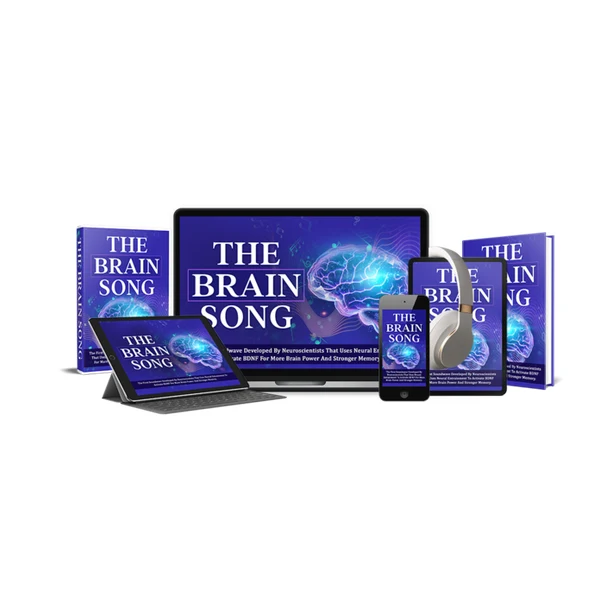
The Brain Song is a digital audio program, not a supplement. You buy a single audio track, download it, and listen to it once a day through headphones for about 17 minutes — though some sources say 12, and that disagreement matters, as you’ll see below.
The whole product is the track, a basic instruction guide and some bonus materials on brain optimisation. There's no capsule, no powder, no bottle — just headphones, a listening routine and whatever device plays your audio. The price is a one-time $39, with lifetime access to the file and no subscription. The crossed-out regular price ($99 to $200, depending on the page you land on) is a promotional anchor, not a price the product ever sold at.
What makes The Brain Song different from most products like this is the price and the risk. At $39 with a 90-day guarantee, it's the cheapest try here, and the easiest to judge — either the listening habit does something for you in three months, or it doesn't. You can see all our Brain & Memory reviews if you want to compare it with the brain capsules on this site.
Why gamma waves get so much attention
The neuroscience underneath is genuinely solid. Gamma waves — brain rhythms around 40 Hz — really are linked to memory, attention and learning. When you focus hard or form a new memory, gamma activity in your brain increases, and in Alzheimer’s research, gamma stimulation has genuine lab findings.
The page takes that real biology and makes a leap: lab findings in mice, using precisely controlled light and sound in a laboratory, become a home audio track that boosts your memory. That leap is where the pitch gets weak. The mouse study used flickering light at exactly 40 Hz in a lab, not headphones playing binaural beats at your desk. The human studies of gamma stimulation are small, early and mostly about brain activity during stimulation — not about lasting memory improvement from listening to a track. And the BDNF claim — that the track raises brain-derived neurotrophic factor, the protein behind brain growth — has no direct evidence at all: exercise raises BDNF reliably, audio stimulation does not, at least not in any study I could find. Hold that split in your head for the rest of the review — real science, no transfer to this track.
What's inside: the track, not a capsule
There’s no label to read here — no ingredients, no doses, no Supplement Facts panel. What you’re buying is a file and a routine. Here’s the honest breakdown of what’s in the package:
| What's Included | What It Is | What It Does |
|---|---|---|
| The Brain Song audio track | MP3, 12–17 minutes depending on source | Gamma-frequency audio (around 40 Hz) using binaural beats and isochronic tones |
| Instruction guide | How to listen: headphones, once a day, in a quiet place | |
| Bonus materials | PDFs | General tips on brain optimisation; contents vary by source |
| Lifetime access | Digital download | The file is yours to keep; no subscription |
Two honest notes. First, the session length is genuinely inconsistent: the most common figure is 17 minutes, but several sources say 12, and the sales page itself isn't consistent. Go by whatever your checkout page lists for the current offer. Second, the creator credit — Dr. James Rivers, "NASA-trained neuroscientist" — comes from the seller's own page, and I couldn't independently verify his credentials or his connection to MIT's Brain Aging Initiative, which some reviews mention. That's the seller's claim, not a verified fact.
Does The Brain Song work? What the evidence says
Short version: the science underneath has real papers behind it. The track doesn’t. And the biggest claims on the page — better memory, sharper focus, more BDNF — have never been tested in a trial of The Brain Song itself.
The strongest evidence is the gamma research. The 2016 Nature study on 40 Hz stimulation in mice is real and widely cited, and human studies since then have found that gamma stimulation changes brain activity during the stimulation itself — you can see the research record on PubMed. Binaural beats have their own small literature: some studies find modest effects on attention and mood, others find nothing, and the overall picture is mixed, as the trials listed on PubMed show.
But the gap is the point. None of those studies tested The Brain Song. The mouse study used flickering light in a lab, not a headphone track. The human gamma studies used clinical-grade stimulation, not a consumer audio file. The binaural beat studies are small, short and inconsistent — and none of them show a lasting memory improvement from daily listening. The BDNF claim has no direct evidence: exercise raises BDNF reliably, and no study shows audio doing the same. And the page's claim of 75% to 85% improvements in cognitive scores comes from the seller's own materials, not from a published trial you can read.
Judge it for what it is: a well-produced 17-minute soundscape built on real neuroscience, with no product-specific testing. That's the honest summary. A neurological breakthrough is not.
How to listen to it
Once a day, through headphones, for about 17 minutes — or 12, depending on which version you get. The guide says to listen in a quiet place, in a single sitting, before you start work, and a good pair of headphones matters: binaural beats only work when each ear hears a slightly different frequency.
The routine is the whole product. There's nothing to swallow, nothing to mix, nothing to time around meals. The investment isn't money — it's consistency. If you buy it and use it twice before forgetting about it, you won't get any benefit regardless of whether the technology works. Tie it to something you already do every day — the first coffee, the commute, the wind-down before bed — and treat it like a habit, not a purchase.
One practical note: the page says the program is not appropriate for people with certain neurological conditions, including epilepsy or severe psychiatric disorders. If that applies to you, don't use brainwave audio without asking your doctor first.
What results are actually realistic?
The page’s buyers talk about memory coming back, focus sharpening and brain fog lifting in days. That’s a wish list, not a schedule — here’s what the audio research actually supports:
- First couple of weeks: usually nothing obvious straight away. Any effect would be subtle — a calmer, more focused feeling during the listening session itself, which is also what a quiet 17 minutes with headphones would give you anyway. That's the placebo problem with audio products: the ritual itself is relaxing.
- Weeks 4 to 8: this is where a daily habit starts to show whether it's doing anything. If you notice steadier focus during work, it could be the track — or it could be the 17 minutes of quiet, the better sleep, or the fact that you're paying attention to your focus for the first time. Be honest with yourself about which one it is.
- Months 2 to 3: the window the 90-day guarantee actually covers. If the track is doing anything for memory and focus, this is when you'd expect to notice it looking back. If you notice nothing, that's your answer — and the refund is there for exactly that reason.
The line that matters: no published trial of The Brain Song itself exists. The gamma science is real. The finished track hasn't been tested that way. And no audio file has ever been shown to raise BDNF or reverse memory loss.
What to know before you buy
Four things on the sales page gave me pause. Check them before you order:
- The session length shifts. Some sources say 17 minutes, others say 12. The exact length is one of this product's documented inconsistencies. Go by whatever your checkout page lists.
- The crossed-out price is a prop. The page shows a regular price of $99 to $200, struck through, next to the $39 offer. The product sells at $39 — the higher figure is a promotional anchor, not a price it ever sold at.
- The creator credit can't be verified. Dr. James Rivers is described as a NASA-trained neuroscientist with links to MIT's Brain Aging Initiative. That comes from the seller's own page, and I couldn't independently verify it.
- Bonus contents vary by source. Different reviews list different bonuses. Screenshot what your checkout page promises, so you can check what actually arrives.
To be fair, the price is a genuine one-time $39 with no subscription, the guarantee is a real 90 days through ClickBank, and the checkout is a known third-party retailer. That's a higher bar than most sales pages in this space clear.
How much does The Brain Song really cost?
Simple pricing, for once. One program, one price, no tiers to decode — $39, once, for the track, a guide and the bonuses, with lifetime access.
| Package | What's Included | Price | Shipping | Total |
|---|---|---|---|---|
| Full program | Audio track + guide + bonuses, lifetime access | $39 | None — digital | $39 |
That's $39 all in, one time. No subscription, no autoship, no upsell bundles, no shipping — it's a digital download. The crossed-out regular price ($99–$200 depending on the page) is a promotional anchor, not a real price. Prices are set by the seller and they can change — check the live checkout before you pay.
The price, per day: at $39 one-time, the arithmetic is kind. Spread over the 90-day guarantee window it’s $0.43 a day ($39 ÷ 90), or $0.43 a listening session if you use it daily — and over a full year of daily listening it’s about $0.11 a day. That’s the real reason the risk here is low: even if it does nothing, finding out costs under fifty cents a day.
The 90-day guarantee: how it works
The official page promises a 90-day money-back guarantee: if you’re not satisfied, contact support within 90 days and request a full refund. ClickBank processes the checkout, so its refund channel backs the purchase too — though ClickBank’s standard window is 60 days, so confirm the 90-day figure on the checkout page.
One practical detail: because the product is a digital download, there's nothing to return. The refund is handled by email and through ClickBank's support, and review sources say it's usually processed within 2 to 3 business days. Keep your order confirmation and the email receipt.
Why the long window matters: a listening habit takes weeks to judge — the gamma studies ran for weeks, and the page itself recommends daily use. A 30-day guarantee would run out before you'd had a fair trial. Ninety days covers three full months of daily listening. That's how a guarantee ought to work.
What customers say
So what do the buyers the page features actually say? Better focus during work. Less brain fog. A calmer feeling after listening. The believable ones are the modest ones about focus — and even those come hand-picked from the seller’s own site, so there’s no way to check them. The dramatic ones — memory transformed, genius unlocked — are exactly the stories a seller reaches for when the ordinary ones aren’t dramatic enough. Judge it on the price and the refund window, not the photo gallery.
The Brain Song pros and cons
- $39 once, no subscription — the cheapest try of its kind I’ve reviewed
- 90-day guarantee through ClickBank, a known retailer
- Built on real gamma neuroscience, not invented science
- Nothing to swallow, no side effects to manage
- Digital download — instant access, lifetime file
- Easy to judge honestly: listen daily for a month and see
- No testing of this track itself — the science is borrowed, not proven here
- Session length shifts between sources (12 vs 17 minutes)
- Creator credentials can't be independently verified
- Bonus contents vary by source
- The ritual itself is relaxing — hard to separate the track from the quiet time
- Not suitable for epilepsy or severe psychiatric conditions without a doctor's say-so
Who should consider it, and who should skip it
- You want a cheap daily listening habit to try for focus and memory
- You'll listen daily for a month and judge it honestly
- You like the idea of a passive routine — headphones on, nothing else to do
- You have epilepsy or a severe psychiatric condition — ask your doctor before you press play
- You're buying it for a memory transformation — no audio track does that
- You won't stick to a daily habit — two listens and a forgotten file is $39 wasted
- You need treatment for a cognitive or mental health condition — see a doctor, not a download
The Brain Song FAQ
Is The Brain Song a scam? –
No — based on what I checked, it’s a real digital product with a working ClickBank checkout, a $39 one-time price and a stated 90-day refund. My concerns are the untested claims and the shifting offer details, not whether you can actually buy it.
Does The Brain Song work? +
I can't say it does, I'm afraid. The gamma science underneath is real, but there's no trial of this track itself, and no audio file has been shown to raise BDNF or produce lasting memory improvement. Any benefit is likely to be subtle — steadier focus during a quiet listening session.
How long is each Brain Song session? +
About 12 to 17 minutes — pinning it down is genuinely hard, because the exact length is one of this product's documented inconsistencies. Sources variously report 12 minutes or around 17. Go by whatever your checkout page lists.
How much does The Brain Song cost? +
$39 one-time for the full program, including the audio track, a PDF guide and bonus materials, with lifetime access. No subscription. Prices were checked in November 2026; they can change, so check the checkout page.
Is there a Brain Song refund policy? +
Yes — a 90-day money-back guarantee, processed through ClickBank. There's nothing to return, since it's a digital download — the refund is handled by email and through ClickBank support.
Is The Brain Song safe? +
For most people, listening to audio is low-risk — but the product's own materials say it's not appropriate for people with epilepsy or severe psychiatric disorders. Ask your doctor first if that applies to you, and keep the volume at a comfortable level.
Where can I buy The Brain Song? +
Directly from the official site — it's sold online only, and you check out through ClickBank. That's the only route to the current price and the guarantee as stated.
Final verdict: is The Brain Song worth it?
The Brain Song earns its 3.8 on price and honesty about its limits, not on proof: $39 once, no subscription, a 90-day refund, and a format built on gamma neuroscience that is genuinely real — 40 Hz stimulation has proper lab findings behind it. Against that, there’s no trial of this track itself, the session length shifts between 12 and 17 minutes depending on the source, and the lab findings don’t transfer cleanly to a home listening track.
My take: at $39 this is the lowest-risk try of its kind I’ve reviewed — buy it, listen daily for a month, and judge it on focus and memory honestly. If you notice nothing, get the refund. And if you have epilepsy or a neurological condition, don’t use brainwave audio without asking your doctor first.
Final score = weighted average of the five categories above. Full method on our How We Review page.
Get Today's Price on the Official Site →How I checked this: official Brain Song sales page for the $39 price, the 17-minute session, the 90-day guarantee and the Dr. James Rivers credit; corroborating reviews for the 12-minute vs 17-minute session conflict and the bonus contents; published research on 40 Hz gamma entrainment and binaural beats as general techniques. Sources: How We Review · Affiliate Disclosure
This article is for general information only and is not medical advice. Talk to your own doctor about memory or cognitive concerns, especially if you have epilepsy, a neurological condition, or a mental health condition — an audio program is not a substitute for medical care. This article contains affiliate links — we may earn a commission if you buy through them, at no extra cost to you. It doesn't change what we write; the cons section above should make that clear.