 Anxiety Remedy
Blood Sugar · Supplement Review
Gluco6 Reviews: 525 mg Blend, Harvard Claim Checked
 60-Day Money-Back Guarantee
Verdict: simple, but the blend is too small Gluco6 is a one-a-day blood sugar capsule: seven ingredients in a 525 mg proprietary blend, plus three disclosed nutrients outside it, for $69–$234 with a 60-day guarantee. Gymnema, chromium and cinnamon are reasonable ingredients — but 525 mg split seven ways averages 75 mg each, the gymnema trials used 200 to 400 mg, and ‘Sukre’ is an invented marketing name for L-arabinose. Buy it for the gymnema and chromium, not for a blood sugar cure.
Get Today's Price on the Official Site →Prices checked November 2026 · 60-day guarantee stated — often misreported as 180 days; confirm at checkout.
What is Gluco6?
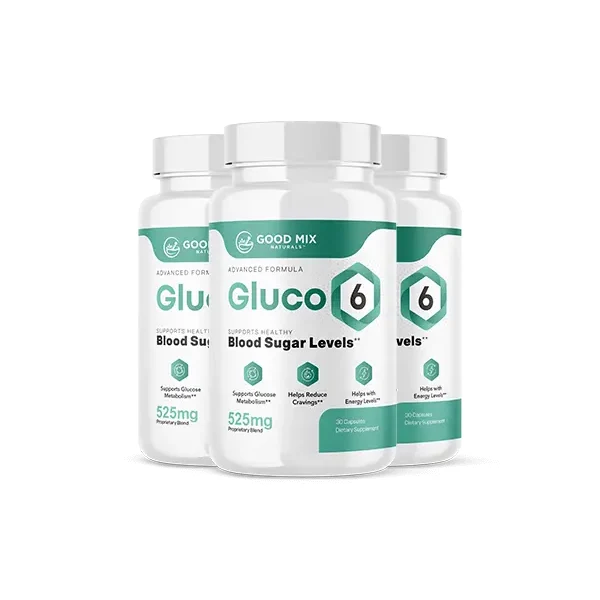
Gluco6 is a daily blood sugar capsule — one capsule each morning before breakfast, 30 capsules a bottle, so one bottle is a 30-day supply. The formula is built on what the seller calls “The Super 6”: Sukre, chromium, cinnamon, TeaCrine, gymnema sylvestre and green tea, packed into a 525 mg proprietary blend.
The pitch is built on a mechanism: GLUT-4 receptors, the doors that let glucose into your cells. The sales page says those receptors get "overloaded" by modern diets, and that Sukre — the lead ingredient — relieves that overload. The page also says the mechanism is "backed by Harvard's latest research". That claim is worth checking, because it's the kind of line that sounds like evidence and isn't: the page's own reference list links to general nutrition and metabolism studies, not to a Harvard study, and not to a study of Gluco6 itself. Our Blood Sugar reviews page has the other blood sugar formula on this site if you want to compare.
I'll score the formula the label actually lists, and flag the marketing wherever it outruns the evidence. Gymnema, chromium and cinnamon are reasonable ingredients with real research behind them. The GLUT-4 story is a theory, not a trial result.
What's inside: the ingredients
Seven ingredients in a 525 mg blend, plus three disclosed nutrients outside it. That split — a little openness around a closed core — is the whole label story. Here’s the honest table, from the Supplement Facts panel:
| Ingredient | Amount per Capsule | What It Does |
|---|---|---|
| Sukre (L-arabinose) | In 525 mg blend — not disclosed | Prebiotic fibre marketed as relieving GLUT-4 receptor overload |
| Theobromine | In 525 mg blend — not disclosed | Cocoa compound, mild stimulant related to caffeine |
| Green tea extract (98% polyphenols, 65% EGCG) | In 525 mg blend — not disclosed | Antioxidant polyphenols studied for metabolism |
| Eleuthero root | In 525 mg blend — not disclosed | Adaptogen traditionally used for energy and stress |
| Theacrine (TeaCrine) | In 525 mg blend — not disclosed | Caffeine-like stimulant; the page sells it for energy |
| Cinnamon bark (Cinnamomum cassia) | In 525 mg blend — not disclosed | Studied for fasting glucose and insulin sensitivity |
| Gymnema leaf | In 525 mg blend — not disclosed | Traditionally used for blood sugar; blocks sweet taste |
| Vitamin D3 | 50 mcg (250% DV) | Hormone and immune support |
| Vitamin B1 (thiamine) | 100 mg (8,333% DV) | Energy metabolism |
| Chromium | 1 mg (2,857% DV) | Trace mineral studied for glucose metabolism |
Two honest notes. First, the disclosed doses are a good sign — D3, B1 and chromium are all published, and the chromium dose (1 mg) is a real amount. Second, the blend is the problem: 525 mg shared between seven ingredients averages 75 mg each, and the gymnema trials used 200 to 400 mg, the cinnamon trials used 1 to 6 g, and the green tea trials used hundreds of milligrams of EGCG. The useful ingredients are almost certainly underdosed — and two of the seven slots are questionable: "Sukre" is an invented marketing name for L-arabinose, and TeaCrine is a caffeine-like stimulant that has nothing to do with blood sugar.
Does Gluco6 work? What the evidence says
In short: the ingredients have papers behind them. The capsule doesn’t have a trial either. And the biggest claim on the page — that it fixes GLUT-4 overload, backed by Harvard research — has never been tested in a trial of Gluco6 itself, and the page’s own citations don’t support it.
The strongest ingredient evidence is for gymnema, chromium and cinnamon. Gymnema has small trials for fasting glucose, listed on PubMed. Chromium has a mixed but real literature for glucose metabolism, reviewed in published meta-analyses. Cinnamon has a 2013 meta-analysis in Annals of Family Medicine finding modest improvements in fasting glucose (Allen et al., 2013, PMID 24019277). Green tea polyphenols have their own metabolic research, and L-arabinose has small studies for slowing sugar absorption in the gut.
But here's the gap in the logic. None of those studies tested Gluco6. The cinnamon meta-analysis used 1 to 6 g a day — this blend holds 525 mg total for seven ingredients. The gymnema trials used 200 to 400 mg — again, more than this blend can hold for one ingredient. The "Harvard research" claim doesn't survive a close read: the page's reference list links to general nutrition studies, not a Harvard study of this product. And TeaCrine, a caffeine-like stimulant, has no blood sugar role at all.
Judge it for what it is: a capsule with three reasonable blood sugar ingredients at almost certainly low doses, plus a stimulant that doesn't belong, and no trial of its own. That's the honest read on it. A blood sugar cure is not.
The quick take
- What it is: a daily blood sugar capsule — one capsule each morning before breakfast — built on a 525 mg proprietary blend of Sukre (L-arabinose), theobromine, green tea, eleuthero root, theacrine (TeaCrine), cinnamon and gymnema, plus vitamin D3, vitamin B1 and chromium disclosed outside the blend.
- What it costs: 2 bottles for $138 ($69 each). 3 bottles for $147 ($49 each). 6 bottles for $234 — $39 each. That works out to $2.30 a day for two bottles, $1.30 on the six-pack.
- The label: the blend is 525 mg for seven ingredients, with no individual amounts. D3 50 mcg, B1 100 mg and chromium 1 mg are disclosed separately. 'Sukre' is a marketing name for L-arabinose.
- The guarantee: 60 days, money back — bottles back even if empty, refund less shipping and handling. Many affiliate pages wrongly claim 180 days.
- My take: The gymnema, chromium and cinnamon are reasonable, and the disclosed vitamin doses are a good sign. But 525 mg shared between seven ingredients almost guarantees the useful ones are underdosed, and the ‘Harvard research’ claim doesn’t hold up.
My rating is
Best for: adults who want a simple one-a-day blood sugar capsule with a readable partial label, and who will judge it over 60 days alongside real food, movement and their doctor's checks.
Why GLUT-4 gets so much attention
The biology underneath is real. GLUT-4 really is the main glucose transporter in muscle and fat cells — it’s the door that opens to let sugar out of the blood and into the cell, and insulin is the key that opens it. When GLUT-4 doesn’t work well, glucose stays in the blood longer.
The page takes that real biology and makes a leap: a capsule ingredient called Sukre — which is L-arabinose, a sugar found in plant fibre — "relieves receptor overload" and fixes the problem. That leap is the problem. L-arabinose has some research for slowing sugar absorption in the gut, which is a real mechanism, but it's a gut mechanism, not a GLUT-4 mechanism. The page's own citations don't support the specific claim it makes, and no study has tested Sukre, or Gluco6, on GLUT-4 function in humans. Hold that split for the rest of the review — the biology is real, the product claim is not proven.
How to take it
One capsule each morning before breakfast, with water. A bottle holds 30 capsules, so one bottle is a month, exactly. The page says to take it daily and consistently — blood sugar support is a long game, and a capsule only works if the routine sticks.
One thing worth noting: the formula contains theacrine and theobromine, both caffeine-like stimulants. The page sells the product as an energy booster, and those two ingredients are why. If you're sensitive to stimulants, take it early in the morning, not at night, and don't combine it with coffee until you know how it affects you. The morning-before-breakfast timing is the seller's instruction — follow the label on the bottle you receive.
They're plain swallowed capsules — nothing to report on taste. The page warns stock is running out — that's a scarcity tactic, not a dosing instruction. Ignore it. One capsule a morning, every day — that's the whole routine.
What results are actually realistic?
The page’s buyers talk about blood sugar stabilising, cravings disappearing and energy coming back. That’s a wish list, not a real timeline — here’s a more honest version, based on what the ingredient studies actually show:
- First couple of weeks: usually nothing obvious to report. Any energy change would be subtle — and it could just as easily be the theacrine and theobromine, the stimulants, as anything to do with blood sugar. Mostly you're just getting the routine going.
- Weeks 4 to 8: this is where the cinnamon and gymnema trials start showing small changes in fasting glucose. If anything shifts, it's subtle, and it will be tangled up with what you're eating and how you're moving. A blood glucose meter would tell you more than any feeling can.
- Months 2 to 3: the window the 60-day guarantee just about covers. If the formula is doing anything for glucose and cravings, this is when you'd expect to notice it looking back — and it's also the window where food and movement either happened or didn't.
The line that matters: no large, independent trial has ever tested Gluco6 itself. The ingredients are studied as individuals. The finished capsule hasn't had one. And no capsule has ever been shown to fix blood sugar on its own.
What to know before you buy
Four things on the sales page worried me enough to list them. Check them before you order:
- The guarantee is often misreported as 180 days. Many affiliate pages claim 180 days. The official site states 60 days. Trust the official site, and confirm at checkout before you pay.
- The 'Harvard research' claim doesn't check out. The page says its GLUT-4 mechanism is backed by Harvard's latest research. The page's own reference list links to general nutrition studies — not a Harvard study, and not a study of Gluco6 itself.
- 525 mg for seven ingredients. The whole blend is 525 mg, which averages 75 mg per ingredient — far below the study doses for gymnema, cinnamon and green tea. The useful ingredients are almost certainly underdosed.
- Two stimulants in a blood sugar capsule. TeaCrine and theobromine are caffeine-like stimulants. They have nothing to do with blood sugar, and they can keep you up at night or raise your heart rate if you're sensitive.
To be fair, though, the page publishes the D3, B1 and chromium doses, states the 60-day guarantee in plain words, says it's a one-time payment with no subscription, and the checkout is a known third-party retailer. Most pages selling supplements in this category can't claim that much.
How much does Gluco6 really cost?
The official site lists three bundles — and no single bottle. Two bottles is the smallest order, at $138 plus $9.95 shipping, and that entry price is the first thing to know before anything else.
| Package | Supply | Per Bottle | Total | Per Day | Shipping |
|---|---|---|---|---|---|
| 2 bottles | 60 servings | $69 | $138 | $2.30 | +$9.95 US |
| 3 bottles | 90 servings | $49 | $147 | $1.63 | Free US |
| 6 bottlesBest Value | 180 servings | $39 | $234 | $1.30 | Free US |
The six-bottle price is the cheapest per day — but it’s also the biggest commitment, and the cheapest way in is still $138 plus shipping. The 3- and 6-bottle packs add two free bonus guides, and the 6-bottle pack is the one the seller says 96% of orders choose. One honest flag: there's no single-bottle option, so the cheapest way in is $138 for two bottles plus $9.95 shipping. Prices are set by the seller and they can change — check before you pay.
The guarantee window is the cheapest way to think about the price: sixty days — the full refund window — costs $147.95 on the 2-bottle pack ($138 + $9.95 shipping), but only $78 worth of the 6-bottle pack at its $39-a-bottle rate. That’s a $69.95 difference for the same 60 capsules, which is why the big pack is the only one that makes financial sense if you plan to use the whole guarantee.
The 60-day guarantee: how it works
The official site states a 60-day money-back guarantee: if you’re not satisfied, return the bottles — even if they’re empty — for a refund less shipping and handling. The guarantee attaches to orders placed through the official checkout, and the seller says the bottles are lot-traceable.
One practical detail: many affiliate pages wrongly claim a 180-day guarantee. The official site says 60 days, and that's the figure to trust. Sixty days is short for a blood sugar product — the cinnamon and gymnema trials ran for 8 to 12 weeks — so if you're going to try it, start on day one and judge it by day 50, using a glucose meter, not a feeling.
Why the window matters: blood sugar changes slowly, and the only honest way to judge this product is with numbers — fasting glucose readings over weeks, not a feeling of energy. A 60-day guarantee just about covers one full trial of that. Ninety days would have been fairer — the seller's own timeline says so.
What customers say
So what do the buyers the page features actually mention? Steadier energy. Fewer cravings. Blood sugar readings that look better. The believable ones are the modest ones about energy and cravings — and even those come hand-picked from the seller’s own site, so there’s no way to check them. The dramatic ones — blood sugar fixed in weeks, medication no longer needed — are exactly the stories a seller reaches for when the ordinary ones aren’t dramatic enough, and they’re dangerous: nobody should stop diabetes medication because of a supplement story. Judge it on the label and the refund window, not the pictures.
Gluco6 pros and cons
- One capsule each morning — no powders, no handfuls of pills
- Three disclosed doses (D3, B1, chromium) — a good sign
- Gymnema, chromium and cinnamon are reasonable blood sugar ingredients
- 60-day guarantee covering even empty bottles
- Fair price per day on the big pack ($1.30)
- One-time payment, no autoship; lot-traceable bottles
- 525 mg split between seven ingredients — the useful ones are almost certainly underdosed
- 'Harvard research' claim doesn't survive a close read
- Guarantee often misreported as 180 days — it's 60
- Two stimulants (TeaCrine, theobromine) with no blood sugar role
- No single-bottle option — cheapest way in is $138 plus shipping
- No trial of the product itself; research cited is on ingredients in general
Who should consider it, and who should skip it
- You want a simple one-a-day capsule and you’ll judge it with a glucose meter, not by feel
- You'll judge it over 60 days alongside real food, movement and your doctor's checks
- You like the disclosed vitamin doses and the lot-traceable bottles
- You have diabetes or take blood sugar medication — ask your doctor before you start
- You're buying it to fix blood sugar or stop medication — no capsule does that
- You're sensitive to stimulants — TeaCrine and theobromine are in here
- You want to know the dose of each ingredient — the blend won't tell you
Safety: what to check before you start
These are familiar plants and vitamins — the same kinds of things in food and traditional medicine, in capsule form. The side effects that come up most with gymnema and cinnamon formulas are mild digestive discomfort in the first few days, and the stimulants in the blend can cause jitteriness or trouble sleeping.
The cautions that actually matter:
- Diabetes medication: gymnema, chromium and cinnamon can all nudge blood sugar, and combining them with diabetes medication can push glucose too low. If you take any blood sugar medication, talk to your doctor first. That isn't boilerplate — it matters.
- Stimulants: TeaCrine and theobromine are caffeine-like. If you have high blood pressure, anxiety or a heart condition, or you take stimulant medication, check with your clinician before starting.
- Never stop medication for a supplement: if you take diabetes medication, do not stop it or change the dose because of a supplement. That decision belongs to your doctor, not to a sales page.
Check with your doctor or pharmacist first, especially if you take any medication. And if a new symptom appears after you start, stop and get medical advice. That's the rule — short and simple.
Gluco6 FAQ
Is Gluco6 a scam? –
No — based on what I checked, it’s a real product with a working checkout, a published partial label and a stated 60-day refund. My concerns are the small blend and the ‘Harvard research’ claim, not whether you can actually buy it.
Does Gluco6 work for blood sugar? +
I can't say it does — the evidence doesn't get there. Its ingredients — gymnema, chromium, cinnamon — have real research behind them for glucose, but there's no trial of Gluco6 itself, and no capsule has been shown to fix blood sugar on its own. Any change will come from food, movement and medication, with the capsule at best helping at the margins.
What are the Gluco6 ingredients? +
A 525 mg proprietary blend of Sukre (L-arabinose), theobromine, green tea, eleuthero root, theacrine (TeaCrine), cinnamon and gymnema, plus vitamin D3 50 mcg, vitamin B1 100 mg and chromium 1 mg disclosed outside the blend. No individual blend amounts are published.
How much does Gluco6 cost? +
2 bottles for $138 ($69 each) plus $9.95 shipping, 3 for $147 ($49 each) and 6 for $234 ($39 each), with free US shipping and two bonus guides on the bigger packs. There's no single-bottle option. Prices were checked in November 2026 — they can change, so verify at checkout.
How do you take Gluco6? +
One capsule each morning before breakfast, with water. A bottle holds 30 capsules: a 30-day supply.
Is there a Gluco6 refund policy? +
Yes — a 60-day money-back guarantee, with bottles back even if empty, refund less shipping and handling. Many affiliate pages wrongly claim 180 days — the official site says 60.
Is Gluco6 safe? +
The ingredients are familiar plants and vitamins — but gymnema, chromium and cinnamon can interact with diabetes medication, and the formula contains two stimulants. Ask your doctor first, and never stop medication for a supplement.
Where can I buy Gluco6? +
Directly from the official site — online-only sales. That's the only way to get the current price and guarantee as stated.
Final verdict: is Gluco6 worth it?
Who should buy it: someone who wants a simple one-a-day blood sugar capsule, understands the doses are almost certainly small, and will judge it with a glucose meter rather than by feel. Who should skip it: anyone who needs real blood sugar management — that’s a doctor’s job, not a capsule’s — anyone sensitive to stimulants, since TeaCrine and theobromine are in the blend, and anyone who takes the ‘Harvard research’ claim at face value.
The 3.4 rests on the routine and the reasonable core: gymnema, chromium and cinnamon are sensible ingredients, three vitamin and mineral doses are actually published, and the big pack runs $1.30 a day. What holds it back is the arithmetic — 525 mg split seven ways averages 75 mg each, the gymnema trials used 200 to 400 mg, and the cinnamon trials used 1 to 6 g — plus a ‘Harvard research’ claim that doesn’t survive a close read.
Final score = weighted average of the five categories above. Full method on our How We Review page.
Get Today's Price on the Official Site →How I checked this: official Gluco6 product page (gluco6.com / gluco6formula.com) for the 525 mg blend, the disclosed D3/B1/chromium doses, the 2/3/6-bottle pricing and the 60-day guarantee; corroborating reviews for the 'Harvard research' claim check and the 180-day misreporting; published research on gymnema, chromium and cinnamon as individual ingredients. Sources: How We Review · Affiliate Disclosure
This article is for general information only and is not medical advice. Talk to your own doctor about blood sugar, especially if you have diabetes, take medication, or have a medical condition — a supplement is not a substitute for medical care, and blood sugar problems always deserve a doctor's check. This article contains affiliate links — we may earn a commission if you buy through them, at no extra cost to you. It doesn't change what we write; the cons section above should make that clear.